

What Is Generative Engine Optimization (GEO)? A Practical Guide for AI Search
Generative engine optimization (GEO) is the practice of improving a website’s usefulness and discoverability for AI-assisted search experiences. In practical terms, it means making your content easy to find, understand, verify, and use when a search system generates an answer with links to supporting pages.
GEO is not a shortcut to appearing in ChatGPT, Google AI Overviews, Gemini, or any other AI answer. There is no special GEO file, schema type, or writing trick that guarantees inclusion. Google says its generative search features continue to rely on its core Search quality and ranking systems, so the durable work is still clear technical SEO, original expertise, and content that satisfies a real reader need. Google’s guide to generative AI features
For a business, the useful question is not “How do we force an AI tool to cite us?” It is: what evidence, explanation, and page experience would make our answer genuinely helpful if a potential customer reached us directly?
GEO, SEO, and AEO: what is the difference?
These labels overlap more than they differ.
| Term | Main focus | Practical takeaway |
|---|---|---|
| SEO | Helping search engines discover, understand, and rank useful pages | Build technically sound, helpful pages around real search intent. |
| AEO | Making answers easy to surface in answer-led search experiences | Put clear definitions, steps, and evidence near the questions people ask. |
| GEO | Improving visibility and usefulness in generative AI search experiences | Combine SEO foundations with original, well-structured information that can support an AI-assisted answer. |
Google explicitly describes AEO and GEO as terms used for work focused on AI-search visibility, while emphasizing that optimization for generative AI search is still optimization for the overall search experience. Google’s AI-search guidance
That matters because it keeps the work grounded. A useful GEO strategy should strengthen your site even when a visitor arrives through an ordinary organic result, a referral, or a direct visit.
How generative search uses web content
AI-assisted search systems can retrieve current web pages, examine relevant passages, and show links that help support an answer. Google describes this as retrieval-augmented generation (RAG), alongside query fan-out, where a system explores several related questions to build a fuller response. Google’s explanation of AI features in Search
For example, someone looking for an AI-search strategy may also want to know:
- whether SEO still matters;
- what content changes are actually worthwhile;
- whether schema, llms.txt, or keyword variations are required;
- how results should be measured; and
- when an agency or internal team should get involved.
A strong article does not need a separate page for every variation. It should answer the important follow-up questions in the context of one useful, focused resource, with clear headings and supporting evidence.
What a practical GEO strategy looks like
GEO starts with the same foundations that make a website valuable to people.
1. Make essential content accessible and unambiguous
Search systems need to access a page before they can consider it. Keep important content crawlable, use clear page titles and headings, and make the main information easy to distinguish from navigation or promotional elements. Semantic HTML and accessible page structure also help people using assistive technologies understand the page.
For service businesses, this means each important offer should have a clear page explaining who it is for, what is included, what the process involves, and what evidence supports the claims. Earnedge’s SEO Services page is the natural hub for this guide because it connects SEO, internal linking, technical foundations, and AI-search visibility.
2. Answer the question before expanding on it
An AI system and a busy reader both benefit when the core answer appears early. Start with a direct definition, then add the conditions, examples, and trade-offs that make the answer reliable.
This is not a demand for tiny “chunks” of copy. Google says there is no required page length or need to break content into artificial fragments for AI systems. Use the length and structure the reader needs. Google’s guidance on avoiding GEO/AEO hacks
3. Add evidence that a reader can inspect
Make factual statements specific enough to verify. Name the relevant organization, product version, geography, date, method, or condition. Link to the source that supports the claim, and explain limitations when they matter.
Original contribution matters here. A practical framework, transparent methodology, real examples supplied by the business, or expert analysis can be more valuable than repeating common advice. Google recommends content created primarily for people, with clear sourcing and demonstrated expertise. Google’s people-first content guidance
4. Use structured data accurately, not as a promise
Structured data can help search engines understand the visible content of a page and may make a page eligible for certain enhanced appearances. It does not guarantee a rich result, a ranking, or inclusion in an AI answer. Use only markup that truthfully represents the main on-page content and validate it before publishing. Google’s structured-data guidance
For this article, a normal Article implementation and valid breadcrumb markup may be appropriate if they match the site’s existing setup. An FAQ section can help readers, but it should contain genuine questions rather than a list created solely to chase visibility.
5. Measure qualified outcomes, not just appearances
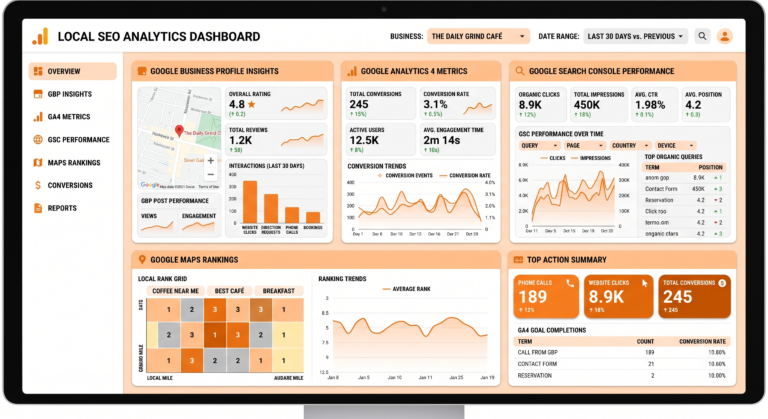
Visibility in AI search is still evolving, and a mention is not the same as a useful business result. Track the outcomes that matter to your organisation: relevant impressions, qualified visits, engaged sessions, enquiries, assisted conversions, and the questions prospects raise in sales conversations.
Use Search Console and analytics to identify patterns, but avoid treating short-term fluctuations as proof that one GEO tactic worked. Review content quality, crawlability, user intent, and conversion paths together.
Common GEO myths to avoid
“An llms.txt file will make every AI tool use my site”
Not necessarily. Google says files such as llms.txt neither help nor harm visibility in Google Search because Google Search ignores them. Other tools may make their own choices, but the file is not a substitute for useful, accessible content. Google’s AI-search guide
“More pages for every query variation means more authority”
More pages do not automatically create more value. Publishing thin variations can create duplication and a poor reader experience. Build a complete resource when the questions belong together; create a separate page only when the audience, intent, or evidence genuinely differs.
“GEO replaces SEO”
GEO depends on SEO foundations. Technical accessibility, page quality, useful internal linking, clear information architecture, and trustworthy content are still the work that makes a site discoverable.
A simple GEO checklist for marketing teams
- Is the page crawlable and clearly focused on one reader need?
- Does the introduction answer the central question accurately?
- Are important claims supported by direct, current sources?
- Does the page add original insight, practical experience, or a transparent method?
- Are internal links useful to the reader and connected to relevant service or supporting pages?
- Are images, captions, and alt text meaningful rather than decorative?
- Does any schema accurately reflect visible content?
- Can the team measure qualified traffic or enquiries after publication?
FAQ
Is GEO the same as SEO?
No. GEO is usually used to describe work aimed at generative AI search experiences, while SEO covers the broader work of helping search engines discover and present useful pages. In practice, strong SEO foundations support GEO.
Can GEO guarantee inclusion in ChatGPT or Google AI Overviews?
No. Search and AI systems choose sources based on many factors, and no page can guarantee inclusion. Focus on useful, crawlable, original, well-supported content instead.
Does GEO require a special schema type?
No. Use structured data only when it accurately represents the visible page content and is appropriate for the page type. It is not a special pass into AI answers.
What should a business publish first for GEO?
Start with the questions your customers genuinely need answered before they buy: definitions, process explanations, comparisons, pricing context where you can support it, and evidence-based guides that connect to your core services.
Next step
If you want to assess whether your current site is ready for AI-assisted search, start with an SEO and content review: examine crawlability, service-page clarity, topic coverage, internal links, evidence, and conversion paths together. You can request a growth audit to identify the highest-impact gaps.



2 Comments