
Local SEO Keyword Research Guide
What Is Local Keyword Research?
Local keyword research is the process of identifying the search terms people use when looking for businesses, products, or services in a specific geographic area. These keywords help businesses optimize their website, Google Business Profile, and local content to improve visibility in local search results.
Local Keyword Research: The Complete Guide to Finding High-Converting Local Keywords (2026)
Every successful local SEO campaign starts with one critical step: understanding what your customers are actually searching for.
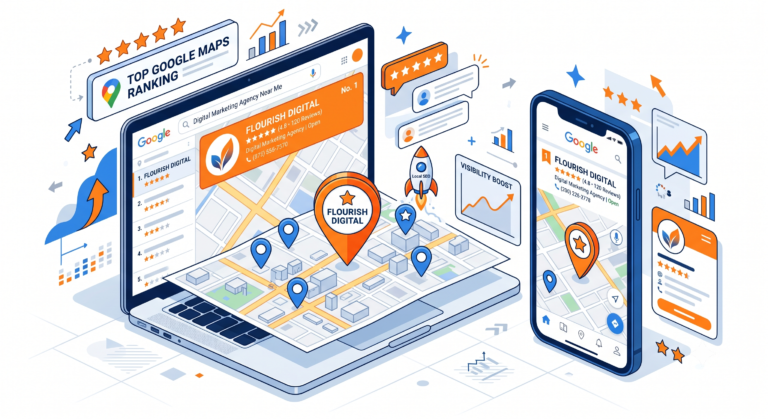
Choosing the wrong keywords can lead to low-quality traffic, poor rankings, and missed business opportunities. Effective local keyword research helps you discover the exact phrases people use when searching for products or services in your area. It allows you to create pages that match search intent, improve your visibility in Google Search and Google Maps, and attract customers who are ready to take action.
Whether you are a local business owner, marketing agency, or multi-location company, this guide will show you how to build a keyword strategy that supports long-term growth in both traditional search engines and AI-powered search platforms.
If you’re new to local SEO, begin with our Local SEO Services page and our What Is Local SEO? The Complete Guide (2026) to understand how keyword research fits into a complete local SEO strategy.
Table of Contents
- What Is Local Keyword Research?
- Why Local Keyword Research Matters
- Understanding Local Search Intent
- Types of Local Keywords
- How to Find Local Keywords
- Organizing Keywords into Topic Clusters
- Common Keyword Research Mistakes
- Local Keyword Research Checklist
- Frequently Asked Questions
Why Local Keyword Research Matters
Local keyword research is more than finding popular search terms. It helps you understand customer intent and create content that answers specific questions at the right stage of the buying journey.
Benefits of local keyword research include:
- Attracting highly targeted local traffic
- Ranking in Google Search and Google Maps
- Improving conversion rates
- Creating content that matches customer intent
- Increasing visibility in AI-powered search experiences
- Building topical authority within your industry
Businesses that target relevant local keywords are more likely to reach customers who are actively searching for their services.
Understanding Local Search Intent
Search intent explains why someone performs a search.
Understanding intent helps you create pages that satisfy users and search engines.
Informational Intent
The user wants to learn something.
Example:
What is local SEO?
This search should lead to your What Is Local SEO? The Complete Guide (2026) article.
Commercial Intent
The user is comparing providers or researching options.
Example:
Best local SEO agency in Florida
This search should lead to comparison pages, service pages, or case studies.
Transactional Intent
The user is ready to hire or purchase.
Example:
Local SEO services near me
This keyword should target your Local SEO Services page.
Navigational Intent
The user wants a specific company or brand.
Example:
EarnEdge local SEO
These searches indicate strong brand awareness.
Types of Local Keywords
A strong local SEO strategy includes multiple keyword types.
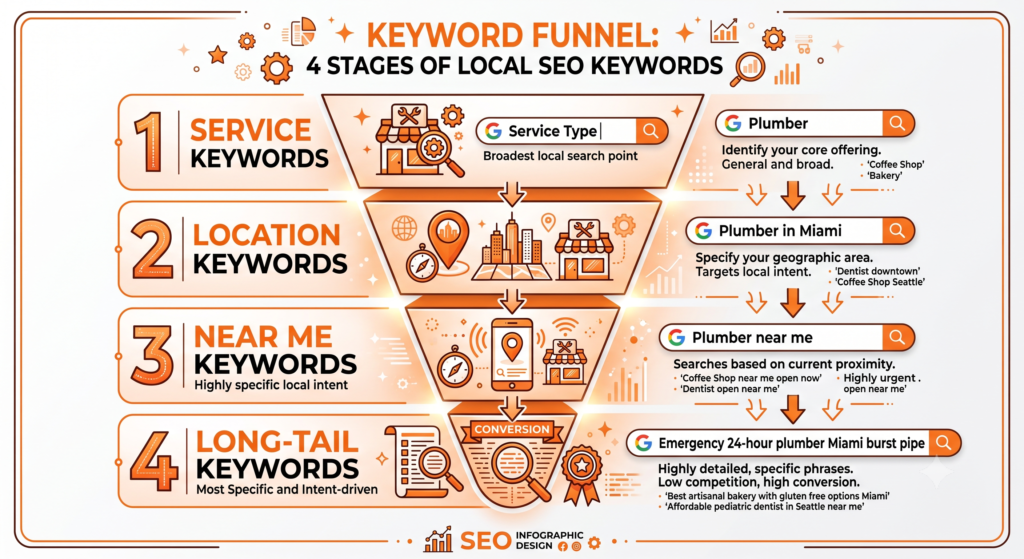
1. Service Keywords
These describe the service being offered.
Examples:
- Local SEO Services
- Google Business Profile Optimization
- Citation Management
- SEO Consultant
These keywords often have high commercial intent.
2. Location Keywords
These combine a service with a geographic location.
Examples:
- Local SEO Agency Miami
- SEO Company Tampa
- Google Business Profile Expert Orlando
These keywords are essential for city-specific landing pages.
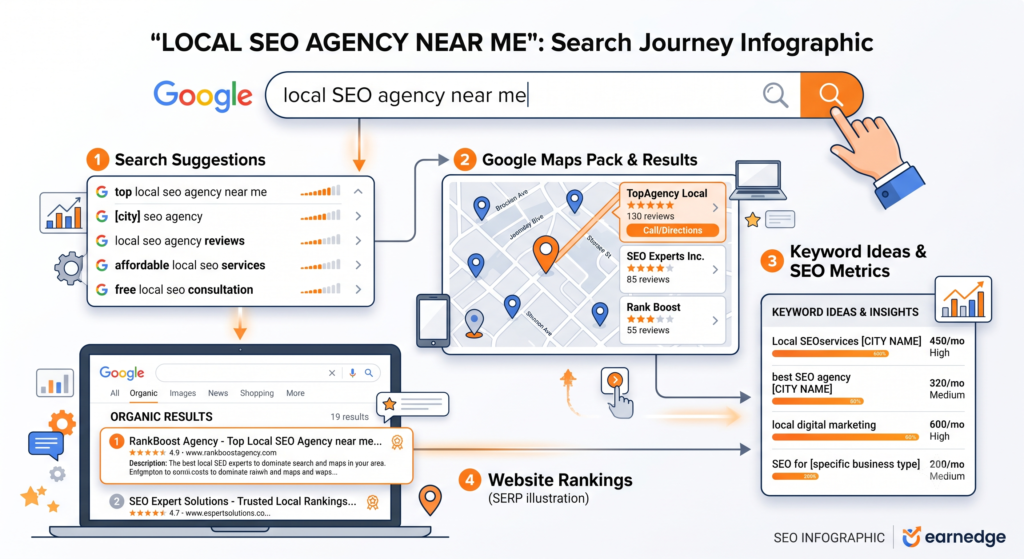
3. “Near Me” Keywords
These searches indicate immediate local intent.
Examples:
- SEO agency near me
- Digital marketing near me
- Local SEO consultant near me
Google uses location signals rather than exact keyword matching to deliver results.
4. Question Keywords
These keywords help businesses appear in featured snippets and AI-generated answers.
Examples:
- What is local SEO?
- How does Google Maps ranking work?
- How much does local SEO cost?
Question-based content improves visibility in voice search and AI search engines.
5. Long-Tail Keywords
Long-tail keywords have lower search volume but higher conversion rates.
Examples:
- Affordable local SEO services for dentists
- Google Business Profile optimization for restaurants
- Local SEO consultant for law firms
These searches usually indicate a clear business need.
How to Find Local Keywords
Effective keyword research combines multiple sources rather than relying on a single tool.
Google Autocomplete
Start typing your primary service into Google.
Google’s autocomplete suggestions reveal real searches people perform every day.
Example:
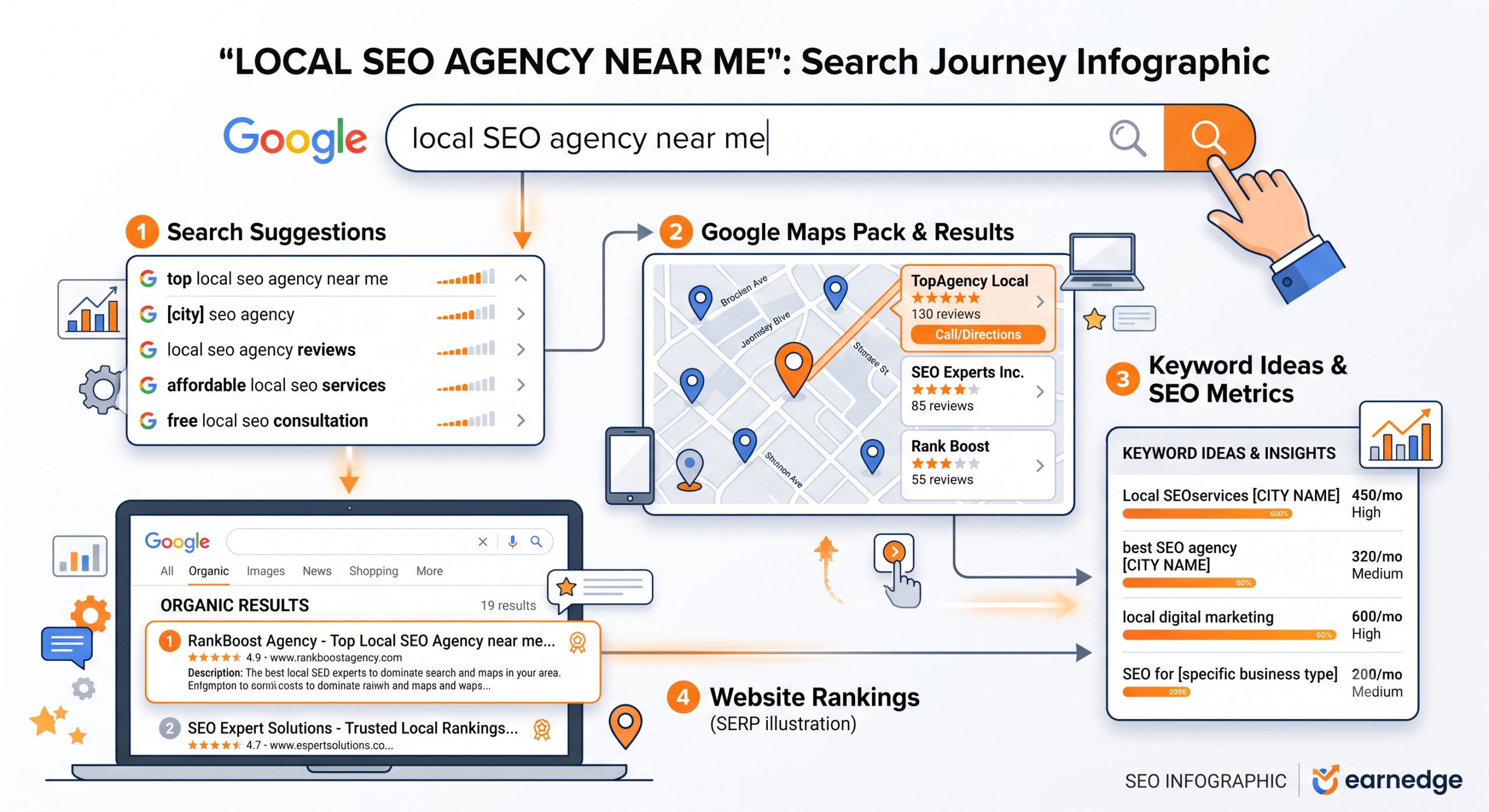
Typing “Local SEO” may produce suggestions such as:
- Local SEO Services
- Local SEO Agency
- Local SEO Company
- Local SEO Expert
These suggestions are excellent starting points.
Google People Also Ask
The “People Also Ask” section provides common questions related to your topic.
These questions can become blog posts, FAQ sections, or featured snippet opportunities.
For example:
- What is local SEO?
- Is local SEO worth it?
- How long does local SEO take?
Link these answers to your supporting guides for stronger topical authority.
Google Maps
Search your target service directly in Google Maps.
Review:
- Competitor categories
- Business descriptions
- Services offered
- Frequently used keywords
- Customer reviews
Reviews often reveal the language customers naturally use when describing a service.
Google Search Console
Search Console shows the queries your website already ranks for.
Look for keywords with:
- High impressions
- Low click-through rates
- Rankings between positions 8 and 20
These keywords often provide the quickest opportunities for improvement.
Competitor Research
Study businesses that consistently rank in the Local Pack.
Review:
- Page titles
- Service pages
- Heading structure
- Internal links
- FAQ sections
The goal is not to copy competitors but to identify keyword gaps and create more comprehensive content.
Organize Keywords into Topic Clusters
Avoid creating multiple pages targeting the same keyword.
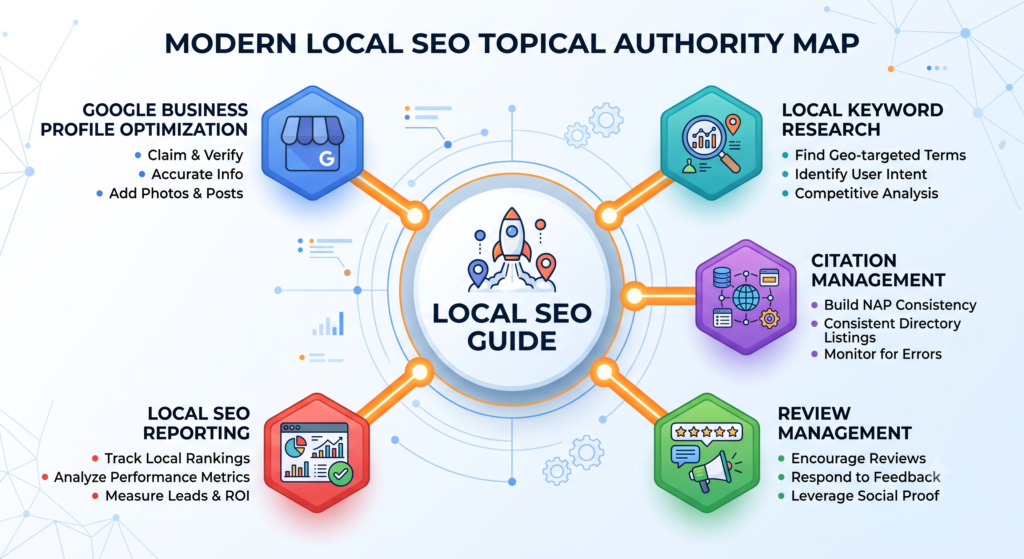
Instead, group related keywords into topic clusters.
Example:
Pillar Page
Local SEO Guide
Supporting Articles:
- Google Business Profile Optimization
- Local Keyword Research
- Local Citation Management
- Review & Reputation Management
- Local SEO Reporting
This structure helps search engines understand the relationship between your content and strengthens topical authority.
Map Keywords to the Right Pages
Each page should target one primary keyword and several closely related secondary keywords.
Example:
Service Page
Primary Keyword:
Local SEO Services
Secondary Keywords:
- Local SEO Company
- Local SEO Agency
- Local SEO Expert
- Local Search Optimization
Blog Page
Primary Keyword:
Google Business Profile Optimization
Secondary Keywords:
- Google Maps SEO
- GBP Optimization
- Google Business Profile Ranking
This approach prevents keyword cannibalization and improves overall site structure.
Think Beyond Google: AI Search Optimization
AI-powered search engines such as ChatGPT, Gemini, Claude, and Perplexity increasingly answer user questions directly.
To improve visibility in these systems:
- Answer questions clearly and concisely.
- Use descriptive headings.
- Include FAQ sections.
- Add real-world examples.
- Structure content with logical heading hierarchy.
- Build topical authority through related articles.
- Keep information accurate and regularly updated.
Instead of focusing only on keywords, think about the complete questions your audience asks and provide comprehensive answers.
Common Local Keyword Research Mistakes
Avoid these common issues:
- Targeting keywords without local intent
- Ignoring customer search intent
- Creating multiple pages for the same keyword
- Focusing only on search volume instead of relevance
- Overlooking long-tail opportunities
- Forgetting to optimize Google Business Profile
- Not updating keyword research as search trends change
Successful local SEO is based on relevance and user intent rather than keyword quantity.
Local Keyword Research Checklist
Use this checklist before publishing new content.
✅ Identify your primary service keywords
✅ Add city and regional modifiers where appropriate
✅ Research long-tail keyword opportunities
✅ Review Google Autocomplete suggestions
✅ Analyze “People Also Ask” questions
✅ Study top-ranking competitors
✅ Group related keywords into topic clusters
✅ Assign one primary keyword per page
✅ Link supporting articles to your pillar page
✅ Update keyword research regularly
Frequently Asked Questions
What is a local keyword?
A local keyword combines a product or service with a specific geographic location or indicates local intent, such as “near me.”
How many keywords should I target on one page?
Focus on one primary keyword supported by several closely related secondary keywords that match the same search intent.
Are “near me” keywords still important?
Yes. Google understands local intent even when users do not include “near me” in their search, but creating content that addresses nearby services remains valuable.
Should I create a page for every city?
Only if you provide unique, location-specific content for each city. Avoid creating duplicate pages with only the location name changed.
Final Thoughts
Local keyword research is the foundation of every successful local SEO strategy. By understanding search intent, targeting the right keyword types, and organizing content into topic clusters, you can improve visibility in Google Search, Google Maps, and AI-powered search experiences.
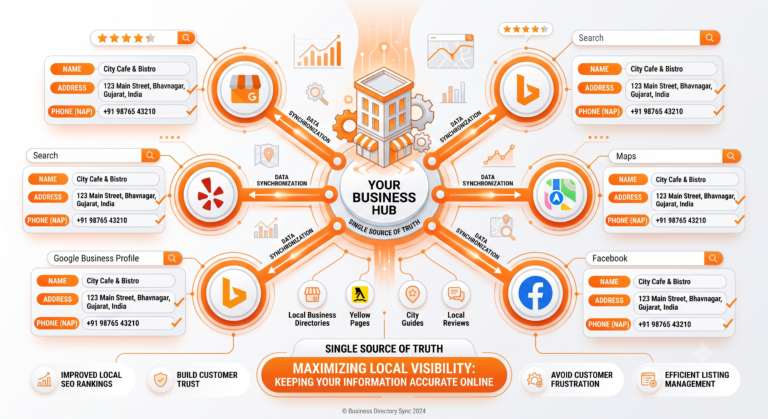
Once you’ve identified the right keywords, the next step is to optimize your Google Business Profile so your business appears in local map results. You should also maintain consistent business information through Local Citation Management, build trust with Review & Reputation Management, and measure progress using Local SEO Reporting.
Together, these guides create a complete local SEO framework that supports your Local SEO Services page and strengthens the authority of your What Is Local SEO? The Complete Guide (2026) pillar article.



2 Comments