Local SEO Tips for Small Businesses
Local SEO Tips for Small Businesses
Local SEO boosts visibility for small businesses in local search results, attracting nearby customers (How to Improve Local SEO: 11 Best Practices). This article details strategies for optimizing your online presence, including Google Business Profile management, citation building, and keyword targeting.
What Is Local SEO?
Local SEO helps your business appear in search results when people nearby search for what you offer (Local SEO: The Definitive Guide for 2026 (+ Free Toolkit)). It optimizes your online presence to connect with local users seeking relevant products or services. This visibility attracts potential customers, encourages visits and calls, and increases brand awareness. For example, a search for “barber Boston” displays local businesses.
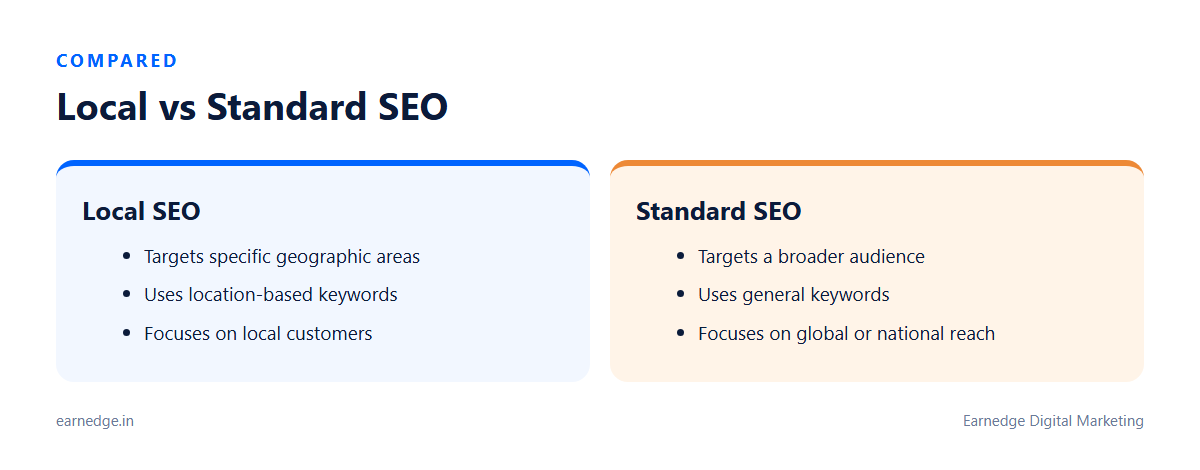
Like standard SEO, local SEO relies on Google scanning its index to provide relevant results (Local SEO: The Definitive Guide for 2026 (+ Free Toolkit)). When searching for a local solution, your need is often specific and immediate. Ranking for local keywords can significantly benefit your business. Additionally, local SEO tactics can help you manage your online reputation and gain an edge over nearby businesses.
Optimize Your Google Business Profile
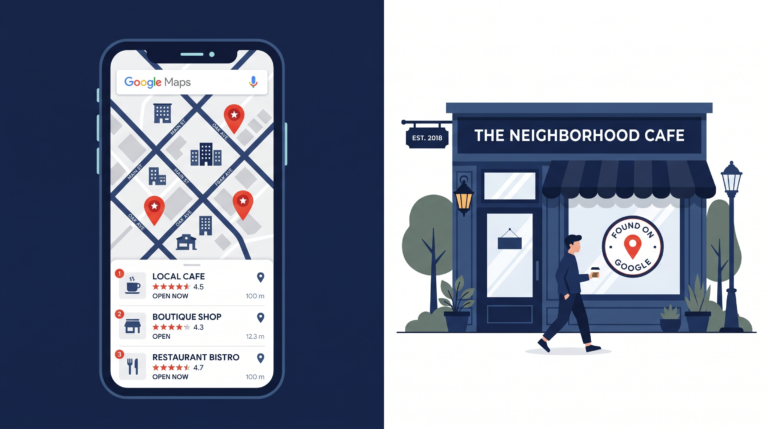
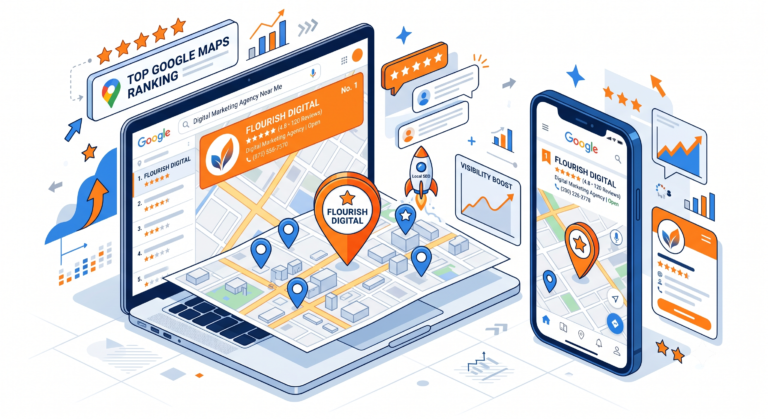
Your Google Business Profile is a crucial asset for local SEO. It’s a free listing from Google that helps them understand your business and display it for relevant searches. An optimized profile can help your business appear in the local pack, a display of the most relevant local businesses on a map.
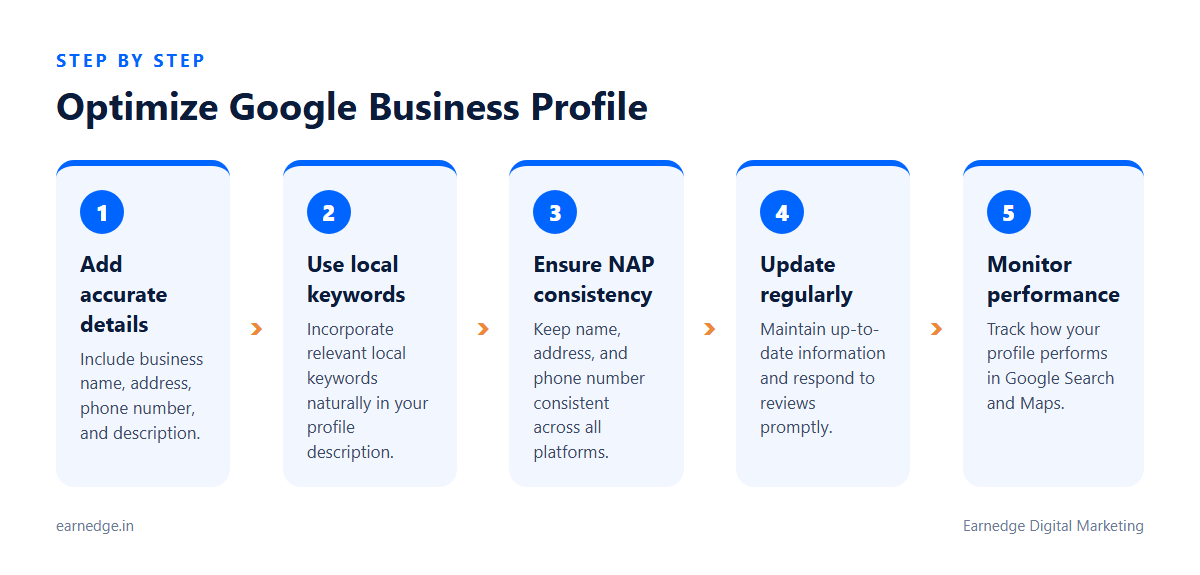
To optimize your profile, include key details. Write a clear description summarizing your business, who you serve, and your location. Incorporate relevant local keywords naturally, avoiding keyword stuffing. Ensure your name, address, and phone number (NAP) are consistent across your profile, website, and other listings.
Your Google Business Profile influences how your business appears on Google Search, Maps, and Shopping. Three factors determine map pack rankings: relevance, distance, and prominence.
Use Location-Specific Keywords
Local keywords help your content connect with nearby audiences. These are the precise search terms people in your area use to find local businesses, services, or information. Identifying the right local keywords is a key first step in local SEO.
Begin by examining search engine results pages (SERPs). Search for your service combined with your location, for example, “Chicago plumber” or “dentist in Philadelphia”. Incorporate keywords that blend your service with your location, such as “cosmetic dentist Chicago” or “emergency plumber Austin”. Then, include these local terms naturally within title tags, meta descriptions, URLs, headers, and the body of your content.
Tools like Semrush’s Keyword Magic Tool can assist in discovering local keywords. You can also leverage the AI-powered feature to receive customized suggestions. Effective local SEO tactics can increase both foot and web traffic, ultimately driving business results.
Create Location-Specific Landing Pages
Dedicated landing pages for each business location help Google understand your business as distinct entities. If your business serves multiple areas, you need unique landing pages for each one, even if you don’t have a physical office. These pages can improve your ranking in local search results and attract customers nearby.
To optimize these pages, incorporate location-specific keywords into headings, subheadings, body content, and meta tags. Ensure the content is entirely original; don’t reuse or make minor changes to existing copy. Focus on your homepage and key service pages first. Including your location keyword early, ideally in the main headline, immediately clarifies your geographic focus for both users and search engines.
Encourage Reviews on Local Platforms
Reviews are a key factor in local SEO performance. Google considers the quality, quantity, and recency of reviews to help determine map pack rankings. Good reviews build trust with customers. Tracking reviews and rankings on Google Maps can help businesses improve their local SEO.
Consider niche-specific platforms too, such as DoorDash for restaurants. General citation sites like Yelp, Tripadvisor, and Foursquare are also important because they are widely recognized and receive significant traffic. Responding to reviews, even negative ones, shows that you care. Tracking your reviews and rankings is an important step.
Build Consistent NAP Citations
Your business is more likely to appear in local search results when its information is found in many trustworthy sources. These online mentions are called citations. Consistent Name, Address, and Phone (NAP) information across these sources is crucial. General citation sites like Yelp, Tripadvisor, and Foursquare are important because they are widely recognized and receive a lot of traffic. Consider also niche-specific citations relevant to your business. Semrush’s Listing Management tool helps you build local citations.
Connect with Other Local Businesses
Search results for “massaman curry near me” display businesses in the searcher’s area. These businesses frequently collaborate with suppliers, distributors, or nearby stores. Review their websites and identify a page where linking to your site would be appropriate.
SEO increases visibility. Local SEO extends beyond rankings, focusing on trust and community building. Highlighting a business’s connection to its local area throughout a website can be beneficial.
Analyze SERPs for Local Insights
Examining search engine results pages (SERPs) provides valuable insights into what local customers are searching for. Focusing on local keywords can increase the chance that Google will rank your content in local searches. Business information appearing in directories and directories can help a business appear in local search results.
Implementing local SEO tactics can help businesses compete with nearby businesses. Using local keywords can increase the chance of ranking in local searches. Creating content with relevant local keywords and dedicated landing pages for each business location can help with SEO. Local SEO can help businesses appear in search engines when nearby users search for products or services. Metrics like search volume and keyword difficulty can guide content marketing and SEO strategy.
FAQ: Understanding Local SEO
What’s the difference between local SEO and standard SEO (Local SEO: The Definitive Guide for 2026 (+ Free Toolkit))?
Local SEO concentrates on a specific geographic area, unlike standard SEO which targets a wider audience. For example, a search for “massaman curry near me” will display local restaurants. Local SEO requires optimization for searches that include location terms.
How does local SEO work (Local SEO: The Definitive Guide for 2026 (+ Free Toolkit))?
Unlike standard SEO, which reaches a broad and geographically diverse audience, local SEO targets a particular region. Google analyzes its index to deliver the most relevant results for a user’s search terms.
What is local SEO (Local SEO: The Definitive Guide for 2026 (+ Free Toolkit))?
Local SEO helps your business appear in search results when people in your area search for your products or services. A successful local SEO strategy can attract local customers, increase foot traffic, and boost brand recognition.
Why is local SEO important (How to Improve Local SEO: 11 Best Practices)?
Local SEO can boost both foot traffic and website visits, help you manage your online reputation, and allow you to compete effectively with nearby businesses. People who conduct local searches are frequently ready to make a purchase.