

Digital Marketing Agency for Startups in India: How to Choose One
A digital marketing agency can help a startup turn a business goal into a focused acquisition and measurement plan. The right agency will not begin by promising rankings, leads, or revenue. It will first clarify the customer, offer, conversion path, available data, and the decisions the startup needs to make next.
For an early-stage company, the goal is usually not to be active on every channel. It is to learn which audience, message, offer, and acquisition path deserve more investment. This guide explains what to look for before choosing a digital marketing agency for a startup in India.
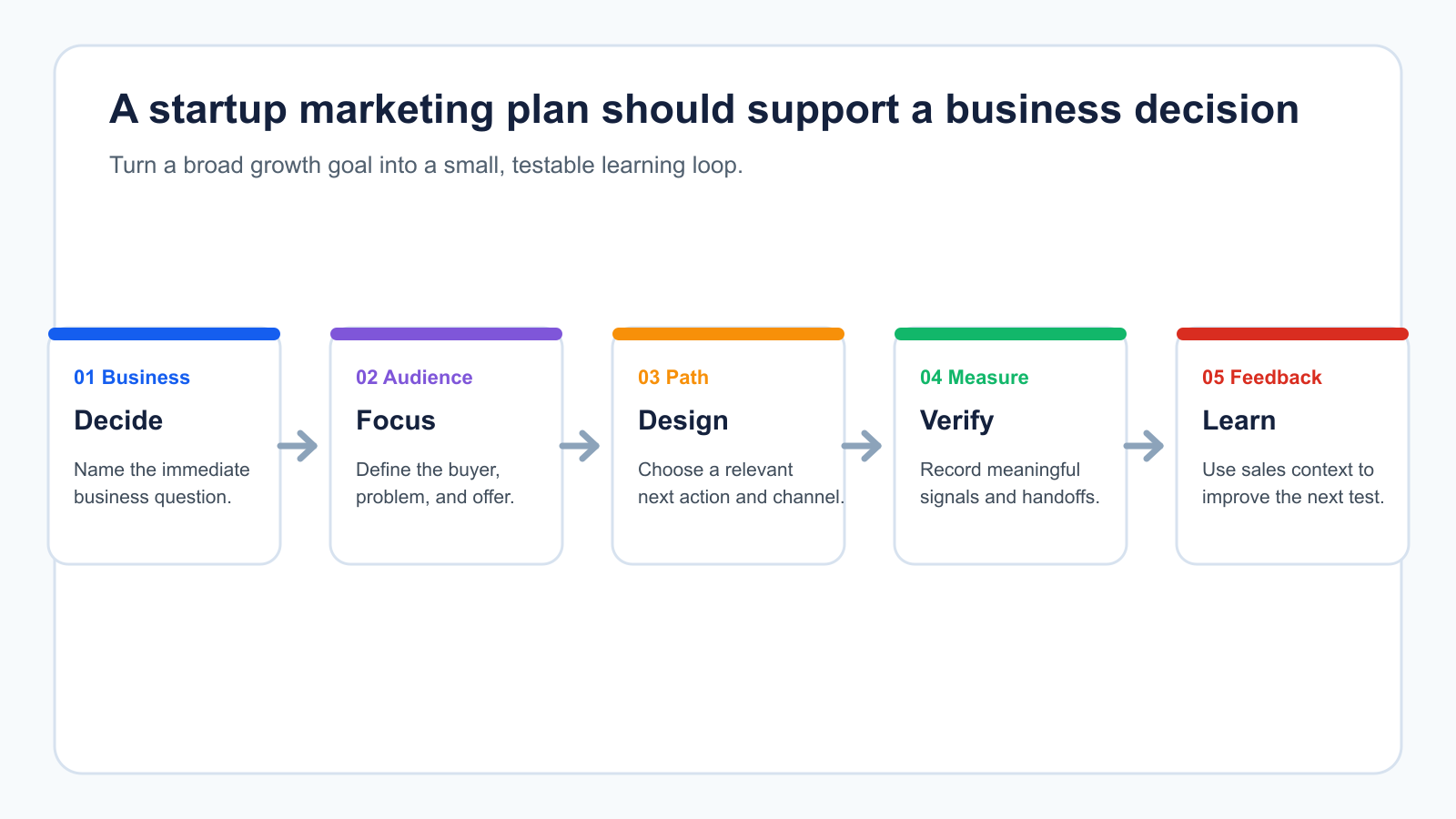
Start with the decision the marketing work must support
Before comparing agencies, write down the immediate business decision. Examples include validating demand for a service, improving qualified demo requests, understanding why paid traffic is not converting, or making a new website easier to discover.
That statement prevents a vague brief such as “we need more marketing.” It also gives both the startup and the agency a way to judge whether the proposed work is connected to a real business need.
Google’s SEO Starter Guide makes the same practical distinction for search: useful, well-organized content and a technically accessible site help people and search systems understand a business, but they do not guarantee a particular ranking. An agency should use that kind of limitation clearly rather than selling certainty that does not exist.
What a startup-focused engagement should include
A useful first phase generally creates a shared view of four areas:
| Area | Question to answer | Useful output |
|---|---|---|
| Customer and problem | Who is the priority buyer, and what problem are they trying to solve? | A concise audience and offer brief |
| Acquisition path | Where can that buyer be reached, and what is the next meaningful action? | A channel and landing-page plan |
| Measurement | Which actions signal interest, fit, and business value? | Conversion definitions and tracking requirements |
| Learning loop | Who reviews lead quality and decides what changes next? | A review cadence and clear owners |
This is why paid media, search visibility, conversion design, and analytics should not be treated as isolated deliverables. A search campaign that sends visitors to an unclear page, or a landing page that creates enquiries no one reviews, cannot answer the startup’s core question.
Earnedge’s performance marketing services can be relevant when a startup needs a channel plan and conversion path. Its analytics and tracking services are the appropriate next step when the business needs to define and verify the events that inform those decisions.
If the startup is comparing a broader partner model, the guide to choosing a growth marketing agency in India explains how acquisition, website experience, measurement, and feedback fit together.
Choose channels for their role, not their popularity
Startups commonly consider search, paid social, organic content, partnerships, referrals, and outbound activity. Each can have a different role. Search may capture existing demand. Content may help a buyer evaluate an unfamiliar problem. Paid social may help test a message or reach a defined audience. No channel is automatically the right first choice.
Ask the agency to explain the audience, message, offer, action, and measurement for each recommended channel. A proposal that lists channels without those connections is difficult to evaluate.
For example, Google Ads provides specific guidance on setting up conversions. That does not make Google Ads suitable for every startup. It does show why a campaign plan should define a meaningful conversion before delivery is assessed only by clicks or impressions.
Make the website and follow-up process part of the scope
Marketing work should account for what happens after a visitor arrives. The agency should review whether the offer is clear, whether the page supports the intended next step, what a form captures, how a lead reaches the right person, and what happens after submission.
Google Analytics 4 can record website interactions such as form starts and form submissions when the relevant setup is in place. Google’s recommended events reference describes generate_lead for a submitted lead form or request for information. These recorded actions are useful signals, but they are not proof that a contact is a qualified opportunity. The startup still needs an agreed definition of fit and sales feedback. See the practical GA4 setup plan for businesses when measurement is not yet documented.
If lead quality is the immediate concern, use a system view rather than asking only for a larger number of form submissions. Earnedge’s guide to B2B lead generation services explains the handoff between capture, qualification, routing, and feedback.
Questions to ask before you choose an agency
- What will you audit before recommending channels or a monthly plan?
- Which assumptions are you making about the customer, offer, and sales cycle?
- What counts as a valuable conversion, and how will it be checked?
- Who owns landing pages, campaign changes, tracking, and lead follow-up?
- What access, approvals, and assets will the startup need to provide?
- How will the agency share what it learned, including work that did not produce the expected signal?
Be cautious of a fixed promise for leads, meetings, revenue, or cost per lead before the agency has reviewed the offer, market, budget, tracking, and sales process. A responsible proposal can describe the method, deliverables, and decision points without presenting uncertain results as guarantees.
A practical first 90-day shape
The exact timing will vary, but an early engagement should create more clarity than activity. Start with an audit of the audience, offer, website, existing analytics, and lead routing. Then choose a small number of deliberate tests. Review what the business learned from both marketing signals and sales conversations before expanding the work.
This approach is more useful than treating a startup as a smaller version of an established company. Startups often need to learn quickly, but fast learning still requires clear definitions and reliable measurement.
Frequently asked questions
What does a digital marketing agency for startups do?
The scope can include audience and offer research, channel planning, landing-page recommendations, campaign delivery, search and content work, conversion tracking, reporting, and testing. The right scope depends on the startup’s business goal and operating capacity.
Should a startup hire an agency before product-market fit?
An agency can help structure demand and customer-learning work, but it cannot create product-market fit by itself. Begin with a narrow, testable business question and make sure the team can act on what it learns.
How should a startup measure marketing work?
Define early actions such as a form submission alongside later signals such as fit, qualified conversations, or sales feedback. Review the relationship between those signals rather than treating every lead as equal.
One Comment