

Growth Marketing Agency in India: What to Expect and How to Choose
A growth marketing agency should help a business build a disciplined way to learn which marketing activities support meaningful commercial actions. It should not treat “growth” as a promise of a fixed result. The useful work is to identify the audience, offer, conversion path, measurement, and feedback process that make each next decision more informed.
This matters because growth work often combines several areas: search visibility, paid media, website experience, conversion tracking, lead follow-up, and reporting. A business does not need every activity at once. It needs a clear reason for each activity and a way to check whether it belongs in the plan.
What a growth marketing agency should clarify first
Before recommending channels or a retainer, ask the agency to review the business goal and its constraints. A practical brief identifies the priority audience, the problem the business solves, the next action a prospective customer should take, the sales process, existing website and tracking, and the people responsible for follow-up.
| Question | Why it matters |
|---|---|
| Who is the priority customer? | It keeps targeting and messaging from becoming too broad. |
| What is the offer and next step? | It gives a landing page, campaign, or content asset a defined purpose. |
| What is a valuable conversion? | It separates a recorded action from a useful business outcome. |
| What happens after interest is captured? | It exposes routing, ownership, and sales-feedback gaps. |
| What will be reviewed next? | It turns reporting into a decision process rather than a list of metrics. |
Google’s SEO Starter Guide is a useful reminder that search work should make content accessible, original, and helpful for people. It does not provide a shortcut to a guaranteed ranking. The same standard applies to a broader growth plan: explain the work, the evidence, and the uncertainty honestly.
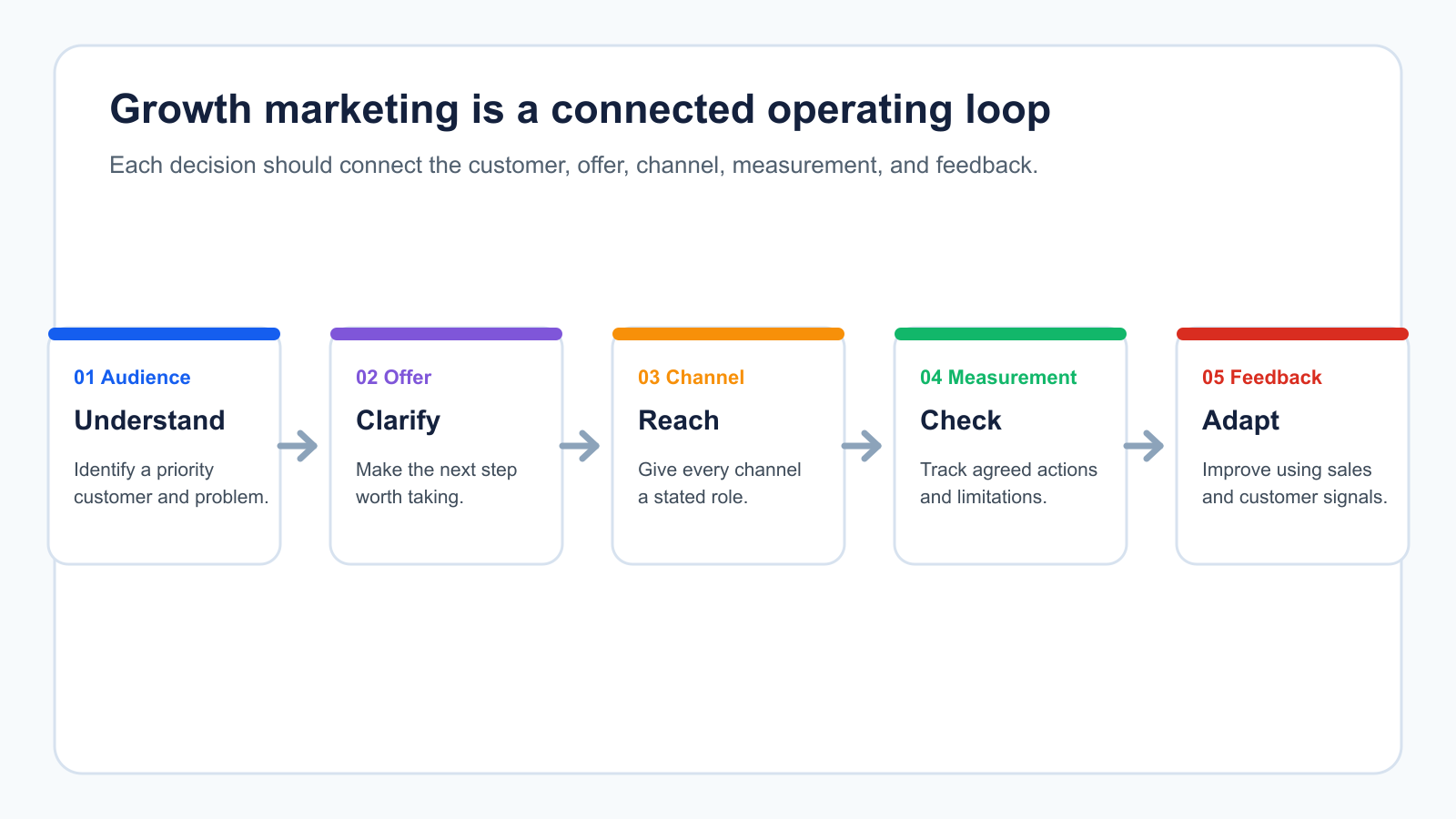
Connect channels to a customer journey
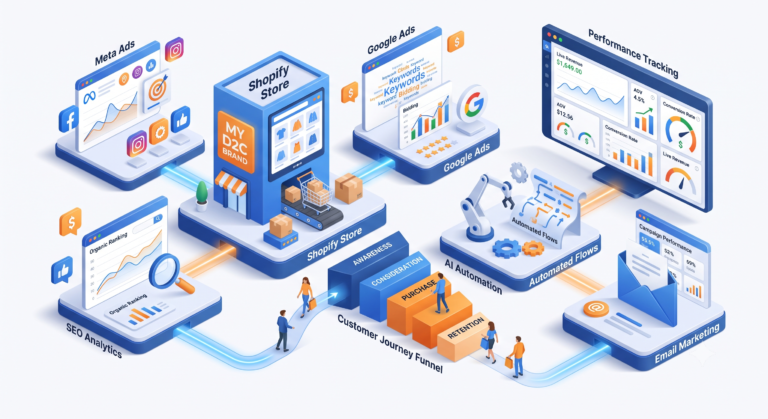
Search, paid media, social distribution, content, email, partnerships, and referrals can all contribute at different stages. The agency should be able to describe the role of each channel instead of recommending it just because it is common.
For example, search advertising may be used to reach people actively looking for a solution, while a helpful guide may help a buyer evaluate an unfamiliar option. The channel choice must be matched to the business’s offer, budget, available creative, landing experience, and ability to follow up.
Earnedge’s performance marketing services are relevant when a business needs that acquisition plan. SEO services can complement it when the business needs durable, helpful search content and technical foundations. Neither should be treated as a standalone answer to every growth problem.
Treat measurement as part of delivery
An agency should define how interest will be measured before judging campaign or content performance. Google’s GA4 setup guidance covers the property, data stream, and tag needed to begin collecting data. The business still has to decide which events indicate genuine progress.
Google’s recommended events reference identifies generate_lead as an event for a submitted lead form or request for information. A recorded event is useful, but it is not independent proof of quality. The team should connect it to qualification, contact status, and sales feedback.
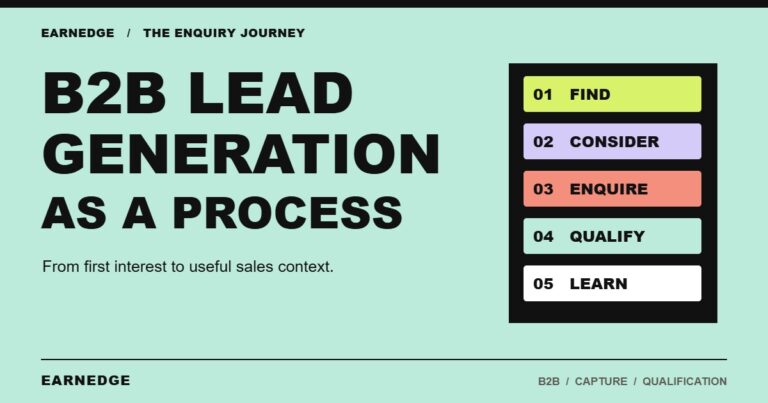
This is why a B2B lead-generation system needs a feedback loop between marketing and sales. If that loop is absent, teams can optimize for submissions that do not fit the business. The GA4 setup plan for businesses explains how to define and test the website events that feed that review.
What to expect in the first working phase
Early work should create a more useful baseline, not a rush to report success. A responsible first phase can include:
- an audit of audience, offer, website path, existing campaigns, tracking, and lead routing;
- a measurement plan with clear conversion definitions;
- a small set of prioritised tests or improvements;
- owners and approval steps for campaign, website, and follow-up changes; and
- a review process that combines marketing signals with business feedback.
Ask to see the boundaries of the engagement. For example, who supplies creative, approves landing-page changes, owns CRM access, and responds to enquiries? Ambiguous ownership slows learning and makes results difficult to interpret.
For an early-stage business, the startup agency selection guide applies the same questions to the faster learning cycles and resource constraints that commonly shape startup marketing.
Questions to ask before choosing a growth marketing agency
- What would you review before you recommend a channel or tactic?
- How will you define the business outcome and the earlier signals that support it?
- What is included in the first audit and what is outside scope?
- How will you document decisions, tests, and learning?
- Who will be responsible for tracking, website changes, and lead follow-up?
- How will you distinguish a platform metric from a business-quality signal?
Be cautious if an agency guarantees a fixed amount of revenue, leads, meetings, or a particular cost outcome before reviewing the business context. A credible plan can be specific about methods and deliverables without pretending that uncertain results are assured.
Frequently asked questions
What does a growth marketing agency do?
The work can include acquisition strategy, campaign management, SEO and content planning, landing-page and conversion recommendations, tracking, reporting, and testing. The right combination depends on the business goal and operating context.
Is growth marketing the same as performance marketing?
There is overlap, but performance marketing often focuses on paid acquisition and measurable campaign actions. Growth marketing can include paid media, search, website conversion, analytics, retention, and sales feedback when those areas support the chosen business goal.
How should a business evaluate an agency proposal?
Look for a clear problem definition, relevant deliverables, ownership, measurement, review process, and realistic limitations. Avoid judging proposals only by the number of channels listed.


2 Comments