
Conversion Tracking Setup Services: What Businesses Should Expect
Conversion tracking setup services help a business define and reliably record the actions that matter on its website and campaigns. The aim is not to collect every possible interaction. It is to make the events, handoffs, and reports that guide real business decisions dependable enough to use.
Before choosing a provider, make sure the scope includes more than installing a tag. A useful setup connects business goals to website actions, tests the implementation, documents ownership, and explains the limits of the data.
Start with a conversion definition
A conversion is not a universal metric. For one business, it may be a completed lead form. For another, it may be a purchase, consultation request, phone call, account sign-up, or a qualified action inside a product.
Write each conversion in plain language before configuring tools. Include the customer action, why it matters, where it occurs, who validates it, and what happens after it is captured.
| Conversion question | Example answer |
|---|---|
| What action is being recorded? | A visitor submits the consultation form. |
| Why does it matter? | It starts a sales enquiry. |
| What counts as quality? | The contact matches agreed customer criteria and receives follow-up. |
| Who checks the handoff? | Marketing confirms the event; sales confirms review and contact. |
| What decision could it support? | Improve the offer, landing page, targeting, or response process. |
This distinction protects a team from treating every low-friction form submission as equal to a qualified opportunity.
What the setup should include
A careful conversion-tracking engagement may include an audit of the current website, forms, thank-you states, consent configuration, analytics property, tag-manager implementation, advertising platforms, CRM handoff, and reporting requirements. The provider should document what will be implemented and what needs access or input from the business.
Google’s GA4 setup guide describes the core steps for adding a property, a data stream, and Analytics code. Those steps create the collection foundation. The business still needs a measured decision plan.
Earnedge’s analytics and tracking services are the relevant internal service page for a wider audit of website events, campaign reporting, and lead flow. The companion GA4 setup plan for businesses outlines the property, data-stream, and event-planning context behind that work.
Configure events that match the action
Google Analytics recommends event names for common actions. Its recommended events reference includes generate_lead for a submitted lead form or request for information. Use an event name only when it accurately represents the visible action on the site.
For paid campaigns, Google Ads also needs a clear conversion action. Google’s conversion setup documentation explains that the business can set up conversion actions for website activity and other sources. Configure the definition deliberately; do not import an event merely because it is available.
If a business later wants to connect ad clicks with qualified or converted leads, Google provides an enhanced conversions for leads implementation checklist. This requires appropriate data handling and policy review. It is not a substitute for consent, security, or a clear lead-quality process.
Test the complete conversion path
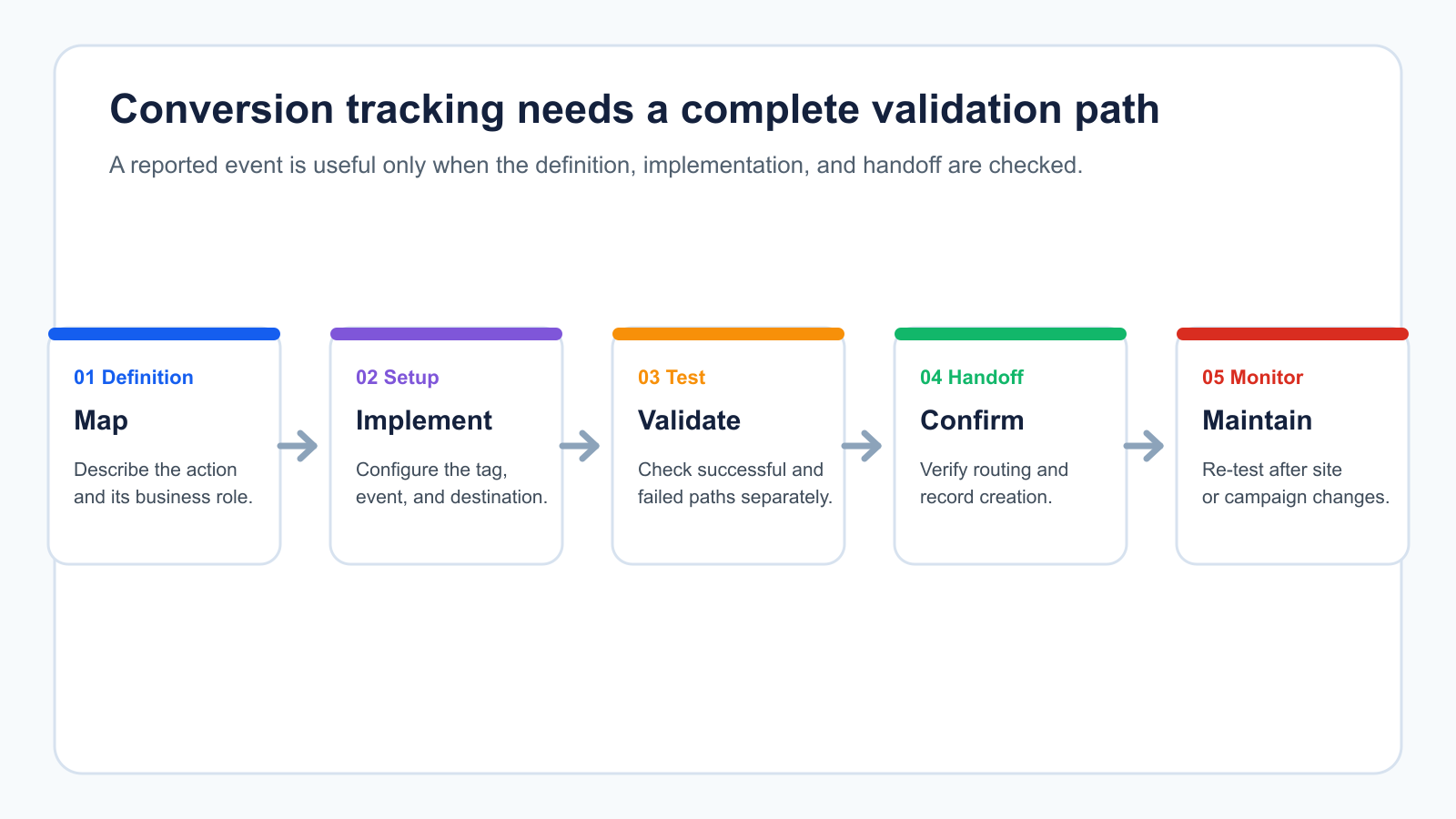
Testing should cover more than checking whether a tag exists. Use a controlled test to confirm that the action fires once, has the expected name and parameters, reaches the intended reporting property, and does not trigger on an unsuccessful or duplicate form attempt.
Google Analytics DebugView can help inspect events while a setup is being tested. Keep a written test log that records the action, expected result, observed result, and any limitation. Repeat the test after form, website, consent, or campaign changes.
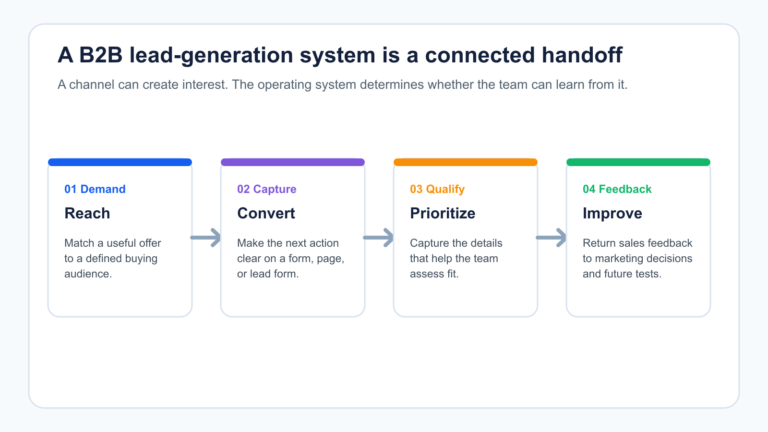
The conversion does not end when the event appears in a report. A lead-based business should also check routing, notification, record creation, and follow-up. The B2B lead-generation guide explains why that feedback loop matters when improving lead quality. If the work is part of a wider acquisition programme, the growth marketing agency guide explains the related ownership and channel decisions.
Common scope gaps to avoid
- Tracking a button click without confirming what happens after the click.
- Counting every form attempt as a completed lead.
- Using a generic event label that no one can interpret later.
- Leaving changes undocumented, so a later website update quietly breaks measurement.
- Reporting platform conversions without a way to compare them with CRM or sales feedback.
- Treating a conversion metric as proof of campaign quality without checking the landing page and lead process.
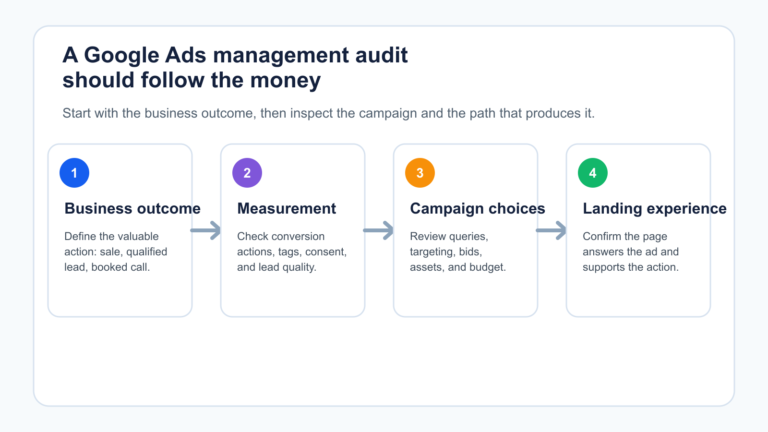
When advertising is part of the plan, the related Google Ads management guide explains why conversion definitions and landing-page alignment should be agreed before performance is assessed.
Questions to ask a conversion-tracking provider
- Which business actions will you map, and which will you intentionally exclude?
- How will you test each conversion and document the result?
- How do website, analytics, ad-platform, consent, and CRM responsibilities fit together?
- What can the data prove, and what will still require sales or operational review?
- Who will monitor the implementation after website and campaign changes?